
For foreign businesses entering the Chinese market, incorporating a local subsidiary is usually treated as the finish line. In practice, it is only the starting point. Once a foreign-invested enterprise (FIE) is properly registered in China, it gains a far more strategic option that many overseas owners overlook: using that subsidiary to reinvest into the domestic supply chain — taking an equity stake in a local manufacturer rather than simply buying from it.
China’s foreign direct investment (FDI) framework allows a locally incorporated FIE to make what PRC law calls “reinvestment” (再投资) — deploying its after-tax RMB profits, capital reserves, or additional paid-in capital into another Chinese enterprise. Because the investing vehicle is itself a PRC legal person ultimately controlled by foreign shareholders, the downstream company can still qualify as foreign-invested, while the capital never leaves the country. For an exporter or trading company, this is the bridge between “we source in China” and “we own part of the Chinese factory that makes our product.”
Shandong stands out as one of the most natural destinations for this move. As one of China’s largest industrial provinces, it combines mature manufacturing clusters, deep contract-manufacturing (OEM/ODM) capacity, skilled labor, and export-grade port logistics centered on Qingdao. The result is a place where a foreign investor can move from customer to co-owner of a real production base.
Understanding FDI Reinvestment After You Incorporate
Reinvestment is distinct from simply funding your own subsidiary. Here, the already-registered Chinese company becomes the investor: it subscribes to equity in a separate PRC enterprise — typically a local factory — and becomes a registered shareholder. The mechanism is governed by PRC company law and the foreign investment regime, and it sits outside the repatriation/capital-outbound rules because the money stays onshore.
- What you can invest with: retained after-tax profits, capital reserve, statutory surplus reserve (within limits), or a fresh capital injection routed through the subsidiary.
- Typical structures: a minority or majority equity stake in an existing workshop, a new joint venture with a local partner, or the acquisition of a going-concern factory.
- Compliance touchpoints: negative-list screening for the target industry, SAIC/AMR registration of the shareholding, MOFCOM filing where required, and foreign-exchange registration for any capital contributed.
Done correctly, reinvestment turns a passive purchasing relationship into a governed ownership position — with the rights, information, and influence that come with it.

Becoming a Shareholder in a Shandong Factory
Taking an equity position in a Shandong manufacturer changes the economics of your supply chain. Instead of negotiating every order from the outside, you sit at the cap table of the workshop that builds your goods. For industries such as metal processing, machinery, automotive parts, or food production, that proximity is decisive.
The operational upside is concrete. You can secure committed production capacity during peak season, lock technical specifications and quality protocols into the shareholder agreement, gain line-level visibility into true cost structures, and align the factory’s incentives with your own product roadmap. Where intellectual property is involved, co-ownership also gives you a stronger footing to protect processes and tooling than an arm’s-length supply contract ever could.
Why Shandong — Industries Built for OEM and Contract Manufacturing
Shandong’s industrial base is unusually broad, which is precisely why it suits foreign investors looking for OEM and ODM partners. Several clusters are worth highlighting:
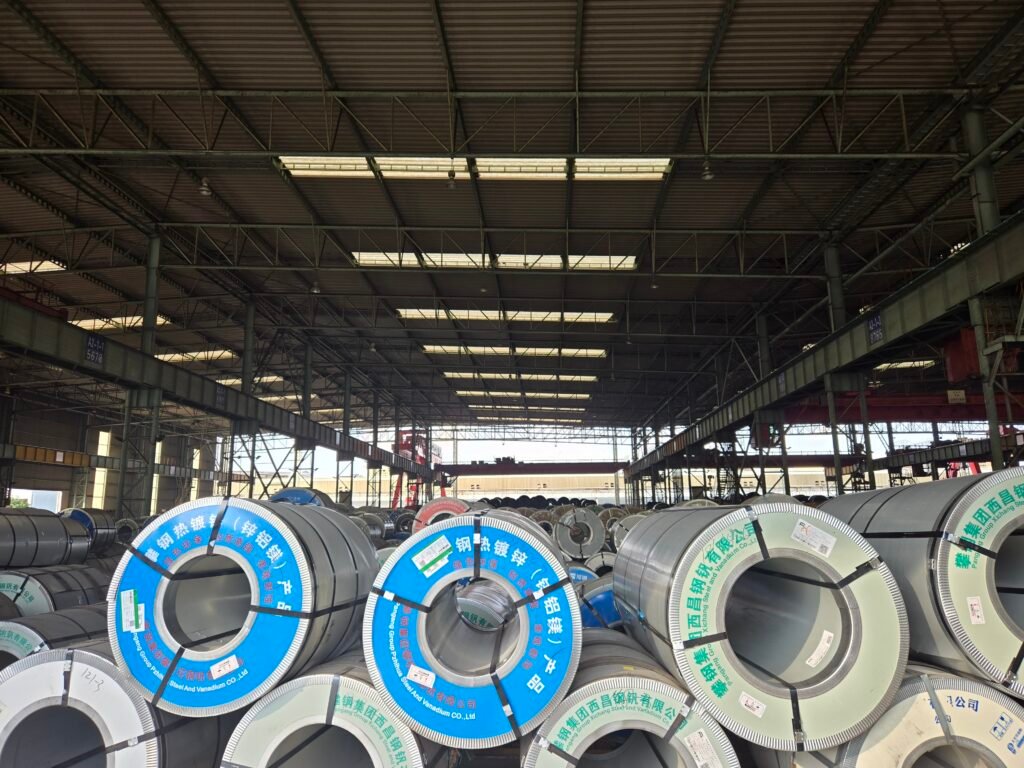
- Metal and steel processing — from coils androlled products to fabricated components, with dense supplier networks.
- Machinery and equipment manufacturing — general and specialized machinery, with strong export orientation.
- Automotive parts and components — tiered supplier bases serving both domestic and global OEMs.
- Chemicals and petrochemicals — large-scale, compliant producers with integrated logistics.
- Food processing — modern lines serving private-label and export programs.
- Textiles and apparel — full value-chain clusters from fiber to finished goods.
These sectors share the traits foreign buyers care about: mature sub-supplier ecosystems, scalable capacity, competitive labor and utility costs, and direct access to international shipping through Qingdao and Rizhao. That combination makes Shandong a practical home for an integrated, export-facing production footprint.

The Practical Benefits for Foreign Investors
Viewed from the trading desk, reinvestment-plus-shareholding delivers advantages a pure sourcing model cannot:
- Cost efficiency through vertical integration — fewer margins stacked between you and the production line.
- Tariff and customs optimization — a controlled, onshore base simplifies export documentation, origin management, and the paperwork of a coherent trade chain.
- Local market access — a domestic manufacturing entity can serve Chinese customers and procurement programs directly.
- Risk diversification — you are no longer dependent on a single contract manufacturer’s capacity or solvency.
- Smoothed profit deployment — reinvested RMB earnings avoid repeated FX repatriation friction.
- Faster time-to-market — co-located production and product development shorten the loop from sample to shipment.
Governance, Compliance and How Rheaura Supports the Process
The structure is powerful, but the execution has edges. Foreign investors must screen the target against the negative list, confirm industry access, complete the shareholder registration and any MOFCOM filing, register the capital injection with foreign-exchange authorities, manage taxation of reinvested profits, and keep related-party transactions at arm’s length. IP protection and a clear exit mechanism belong in the shareholder documents from day one.
Since 1994, Rheaura Group has helped more than 2,000 foreign-invested enterprises incorporate and grow in China. We support the full arc of this strategy — market-entry planning, subsidiary setup, reinvestment structuring, factory due diligence in Shandong and beyond, compliance registration, and ongoing operational backing — so that the move from buyer to shareholder is both lawful and commercially sound.

If you are weighing the establishment of a China subsidiary and the next step of building a Shandong manufacturing footprint through reinvestment, our team can map the structure, the compliance path, and the right factory partners for your product. Contact Rheaura to start the conversation.