

If you’re weighing where to set up your WFOE or Joint Venture in China, Qingdao deserves a serious look. This guide walks through six reasons foreign investors are choosing Shandong’s coastal hub over Shanghai or Shenzhen — from OEM supply chains to PICC export credit insurance.
1. A Coastline City Built for Global Trade
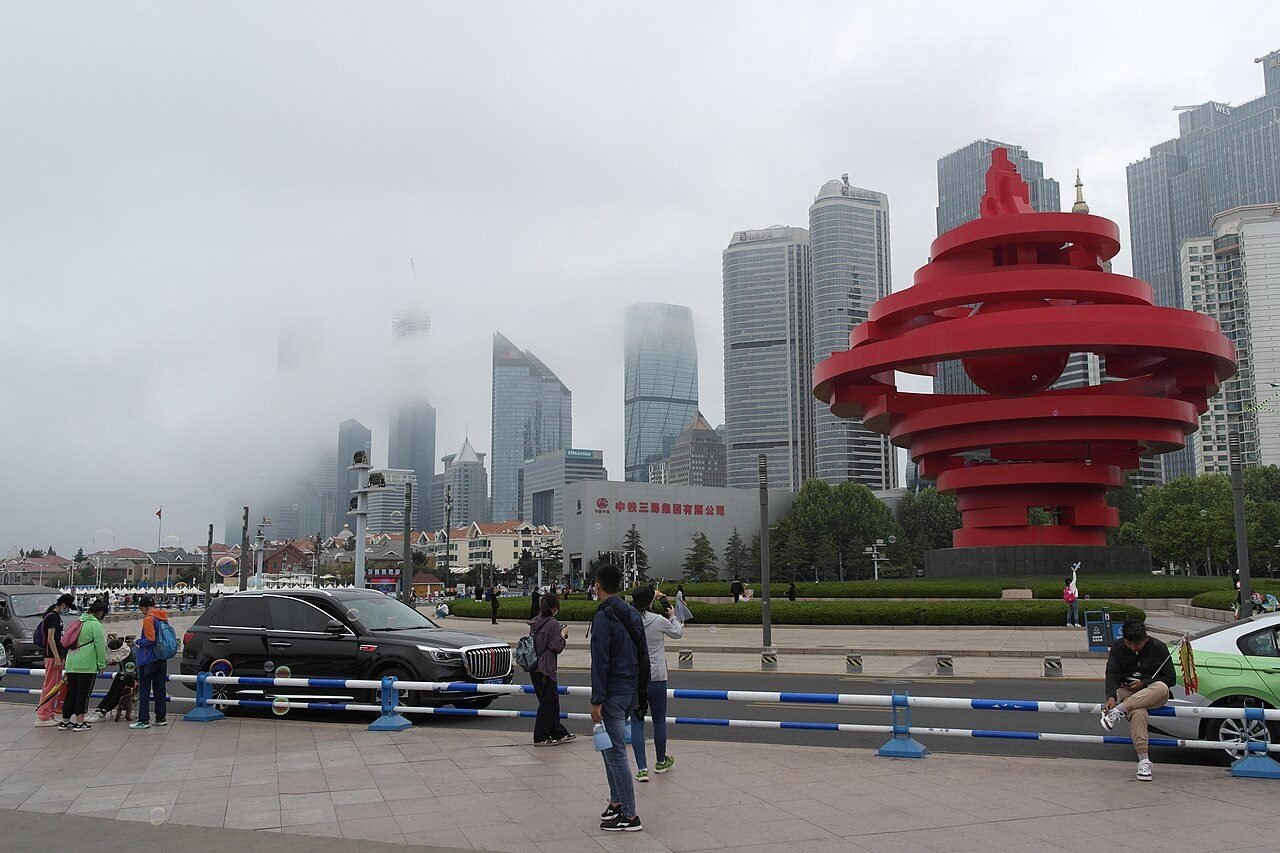
Qingdao sits on the southern tip of the Shandong Peninsula, facing the right Coast of the Pacific and a short ferry ride from South Korea and Japan. The city is home to one of the world’s top-five container ports by throughput, handling more than 30 million TEU a year and connecting directly to over 700 ports in 180+ countries.
That geography translates into three practical advantages for foreign-owned businesses:
- Lower landed cost — over 70% of cargo bound for inland industrial belts (Yangtze River Delta included) can clear customs and trans-ship without leaving Shandong province, shaving days off inland delivery.
- Time-zone alignment with Asia — UTC+8 overlaps the working day for both North American afternoon calls and European morning calls, which matters more than people think when you run a regional HQ.
- Hard-currency clearance — Qingdao is one of China’s designated cross-border trade RMB settlement pilot zones, so invoicing in USD, EUR or RMB from day one is straightforward.
2. Shandong Free Trade Zone (Qingdao Area)
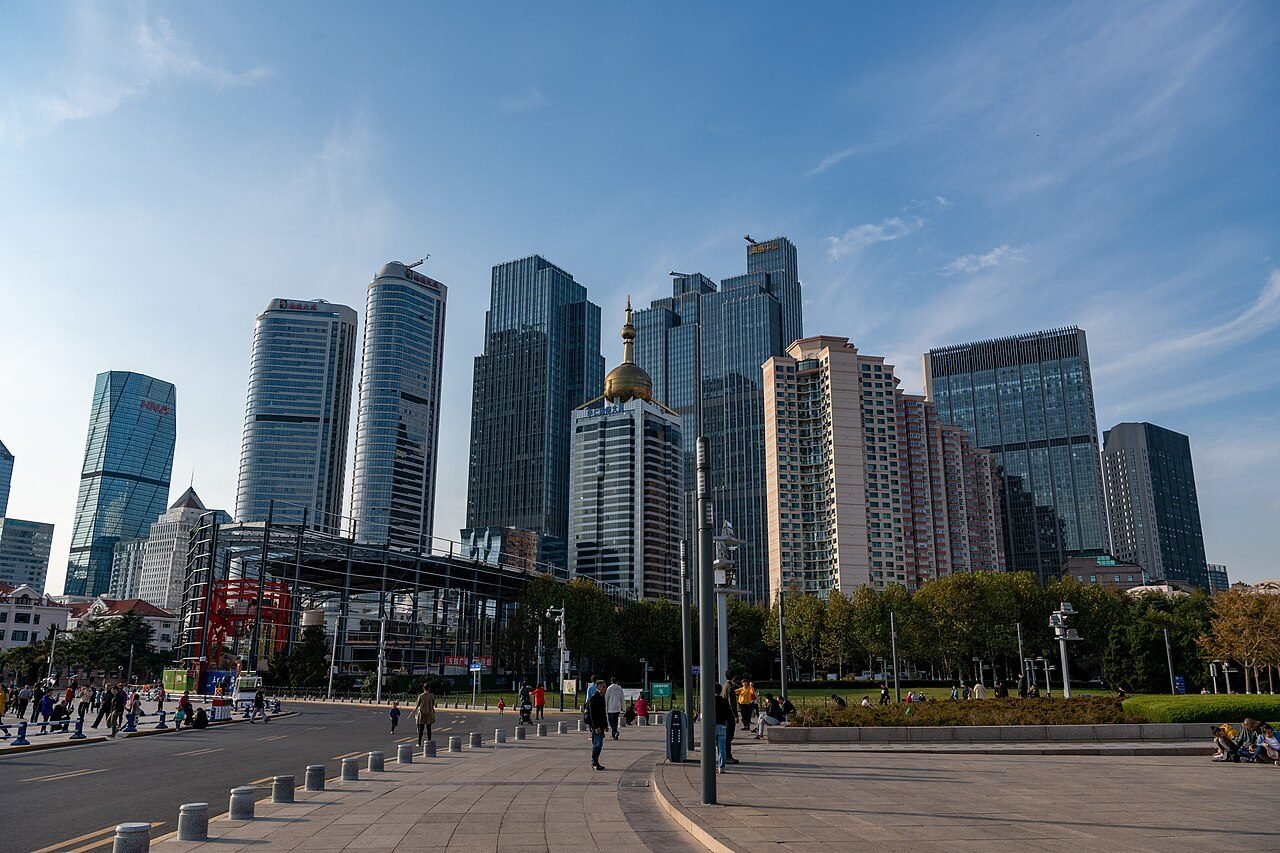
The Qingdao片区 of the China (Shandong) Pilot Free Trade Zone launched in 2019. Companies registered inside the zone enjoy:
- Tariff exemption on equipment, raw materials and intermediate goods used in bonded processing
- Streamlined customs — most declarations clear within 24 hours
- Income-tax breaks for “encouraged” industries (advanced manufacturing, modern services, marine economy, biomedicine)
- Easier cross-border capital flow, including FDI in/out without lengthy SAFE approvals
- Preferential individual income tax for senior foreign managers (often capped at 15%)
For a foreign investor whose supply chain runs through Shandong anyway, the FTZ is usually a one-line change to your incorporation address.
3. Shandong’s OEM Manufacturing Strengths
This is where Qingdao really pulls away from the southern coastal hubs. Shandong is the OEM backbone for several industries that don’t get talked about enough in Beijing expat circles:
Home Appliances
Haier (海尔), Hisense (海信), and Aucma (澳柯玛) are all headquartered in or around Qingdao. The surrounding supply chain produces everything from compressors and PCBs to plastic injection mouldings and sheet metal. If you’re sourcing finished appliances, components, or contract-manufacturing capacity, you can audit factories within an hour’s drive.
Tyres and Rubber Products
Sailun (赛轮金宇), Linglong (玲珑), Doublestar (双星) and Sentury (森麒麟) all run world-scale plants in Shandong. The province supplies roughly half of China’s tyre exports and offers deep chemical-compounding expertise. Many tier-1 automotive OEMs source winter tyres and commercial tyres here.
Textile and Apparel
Shandong is one of China’s top-three textile provinces, with clusters in Qingdao, Weifang and Jinan for woven fabrics, denim, technical textiles and home furnishings. Lead times for sample-to-production runs are competitive with Vietnam or Bangladesh for many SKUs.
Food Processing and Cold Chain
The province is China’s leading producer of peanuts, garlic, apple juice concentrate, and frozen prepared foods. Cold-chain logistics from Qingdao’s Yangshan bonded area to Tokyo or Seoul is overnight by sea.
Marine Equipment and Shipbuilding
Qingdao’s CIMC Raffles (中集来福士) builds offshore wind installation vessels and semi-submersible platforms. The surrounding cluster covers marine engines, deck machinery, navigation electronics — useful for any investor serving offshore energy or shipping.
Heavy Machinery and Equipment
Weichai (潍柴) and Shandong Lingong (临工) supply diesel engines, loaders and excav construction components globally. Many of these firms actively seek overseas distribution partners and joint-venture structures — a natural fit for inbound investors with regional sales networks.
4. Supply Chain, Logistics and Connectivity
Port of Qingdao
- Container throughput: ~30 million TEU annually (5th globally)
- Direct services to: Los Angeles, Long Beach, Hamburg, Rotterdam, Dubai, Singapore, Busan
- Automated terminal operations since 2017 (Asia’s first fully automated container terminal)
China-Europe Railway Express (“Qilu号”)
Qingdao is one of the origin cities for the China-Europe freight rail network. Container trains depart weekly for Almaty, Moscow, Hamburg and Madrid. For buyers in Central Asia and inland Europe, this is a faster and cheaper alternative to sea freight.
Jiaodong International Airport
Cargo capacity of 600,000 tons per year, with dedicated cold-chain and dangerous-goods terminals.
Five National-Level Economic Development Zones
Qingdao has five国家级经开区 plus two bonded zones — among the highest concentration of any single Chinese city. Each has its own industrial focus (marine economy, advanced manufacturing, high-tech, free trade, etc.), giving foreign investors room to choose a sub-cluster that matches their business model.
5. PICC Export Credit Insurance: Solving Foreign Customer Payments for Risky Markets
This one is underrated and rarely covered in expat business guides. PICC Property and Casualty Company (中国人保财险) operates China’s largest export credit insurance (出口信用保险) line through its subsidiary China Export & Credit Insurance Corporation (中国出口信用保险公司, commonly called 中信保 or Sinosure). Together they underwrite the bulk of Chinese exporters’ foreign receivables.
Why this matters for a Qingdao-registered trading company:
- Buyer default cover — if your overseas buyer goes bust or simply refuses to pay within the policy terms, PICC reimburses 70–90% of the loss.
- Political-risk cover — currency-transfer delays, import bans, war, sanctions. Critical for buyers in markets with foreign-exchange controls (parts of Latin America, Africa, the CIS, the Middle East).
- Pre-shipment cover — protects production costs if the buyer cancels after you’ve manufactured the order.
- O/A terms become feasible — most Chinese SMEs avoid Open Account terms for new buyers because of payment risk. With PICC cover, you can safely extend 30/60/90-day credit to overseas customers without tying up working capital. The underwriter’s credit check on the buyer doubles as due diligence.
- Bank financing leverage — once PICC has issued a policy, Chinese banks will discount your foreign receivables at preferential rates (typically PBOC base rate or close to it). This is how you get working-capital float even with overseas buyers paying you 60 days later.
For investors serving markets with foreign-exchange controls — Iran, Venezuela, parts of Myanmar, certain African economies — the combination of Qingdao’s cross-border settlement pilot and PICC cover is often the only viable structure that lets you collect in USD/EUR on time. Rheaura’s own clients use PICC-backed receivables for buyers in the UAE, Pakistan and Central Asia.
6. Real-World Examples from Rheaura Clients
In the last 18 months we’ve supported:
- A Singapore consumer-goods JV registered in Qingdao FTZ, sourcing baby-food packaging from the Shandong food cluster and exporting to ASEAN. Customs clearance under bonded processing; first container shipped in 12 days from WFOE opening.
- A Pakistani filter manufacturer opening a WFOE in Qingdao to source filter media and finished assemblies from Shandong OEM plants, then re-export to South Asia and the Middle East. Using PICC O/A cover for buyers who previously demanded 100% T/T upfront.
- A Vietnamese trading company opening a Qingdao presence to procure tyres and home appliances, taking advantage of the China-Europe rail connection to ship inland to Vietnam and onward to other ASEAN markets.
How Long Does Qingdao WFOE Registration Take?
Standard timeline from documents-in to business license:
| Step | Days |
|---|---|
| Company name pre-approval | 1–2 |
| SAMR registration | 3–5 |
| Bank account opening | 5–7 |
| Tax registration | 1–2 |
| Foreign-exchange registration | 2–3 |
| Total | 12–14 |
Most of our clients see their WFOE open within 14 working days, faster than Shanghai or Shenzhen in our experience because Qingdao’s SAMR office is less congested.
FAQ
Do I need to travel to Qingdao for registration?
No. Foreign shareholders can sign powers of attorney in their home country (notarised and apostilled, then consular-legalised by a Chinese embassy) and our local team handles the rest.
What is the minimum registered capital?
There’s no statutory minimum, but the amount you commit must be realistic for your business plan. Most trading WFOEs register RMB 500K–1M; manufacturing WFOEs usually RMB 5M+. Paid-in timing is negotiable.
Should I choose Qingdao over Shanghai or Shenzhen?
If your supply chain is in northern/central China, your buyers are in Northeast Asia, your products are heavy or bulky, or you want lower cost — Qingdao wins. If your customers are concentrated in the Yangtze Delta and you need proximity to finance and brand markets, Shanghai may still fit better.
Can I open a multi-currency account from day one?
Yes. Qingdao banks routinely open RMB + USD + EUR + HKD accounts during initial onboarding.
Get Started
If you’re evaluating Qingdao for your China market entry, we can run a free 30-minute call to walk through your specific product, supply chain and target markets. Rheaura has been supporting foreign-invested companies in Shandong since 1994 and currently assists 2000+ foreign-invested companies across the FTZ and the wider province.
Reply to this email or reach out via the contact form on this site to schedule a conversation.
About Rheaura: Qingdao Rheaura Industrial Park Co., Ltd. is an official partner of the China One Belt One Road Working Committee. We assist foreign companies with WFOE registration, joint-venture structuring, representative office setup, and ongoing compliance across mainland China.
Tags: WFOE registration, Qingdao, Shandong, Free Trade Zone, China company formation, OEM manufacturing, PICC export credit insurance, China-Europe railway, foreign-invested enterprises